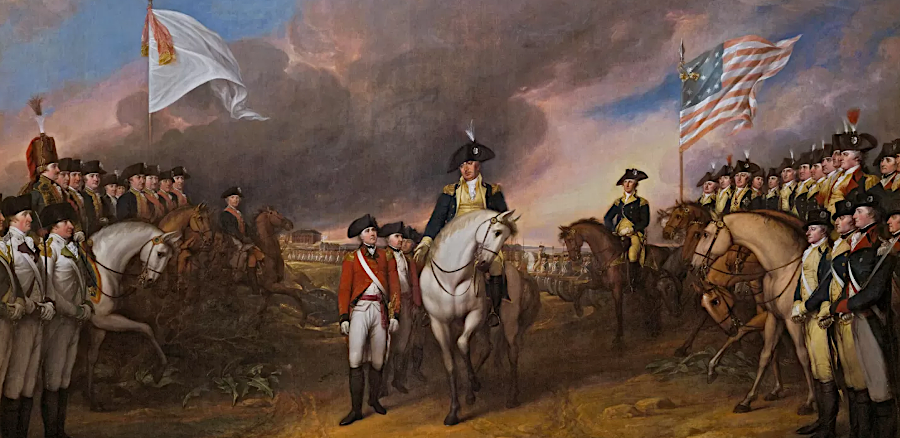
September 2031 is the 250th anniversary of George Washington and the Compte de Rochambeau marching with the American and French armies through Prince William County on the way to Yorktown.
They followed essentially the route of the Potomac Heritage National Scenic Trail (PHNST) between the Occoquan River and Chopawamsic Creek. A significant part of that trail in Prince William County is completed and open to the public already.
Two additional segments will open before 2031. The section from Featherstone Road to the Rippon Station of Virginia Railway Express (VRE) will open in mid-2026. The Powells Creek Crossing, with bridge/boardwalk linking Leesylvania State Park to Potomac Shores, is in design now. The planned design of the Powells Creek Crossing is partially funded from a 2019 bond issue approved by county voters.
Completing the rest of the PHNST by 2031 will require more detailed planning, acquiring right-of-way, obtaining funding, and then constructing multiple trail segments:
– Town of Occoquan to I-95
– underneath I-95 past Destination Place to the Vulcan stoneyard at Route 1
– Vulcan stone yard underneath Route 1 to Prince Wiliam Water pump station (and existing trail through former Belmont Bay golf course)
– rest of Powell’s Creek Crossing
– Powell’s Creek to Potomac Shores Town Center
– Potomac Shores Town Center to Possum Point transmission line
– Possum Point transmission line to Swans Point Elementary School
– Swans Point Elementary School to Dumfries
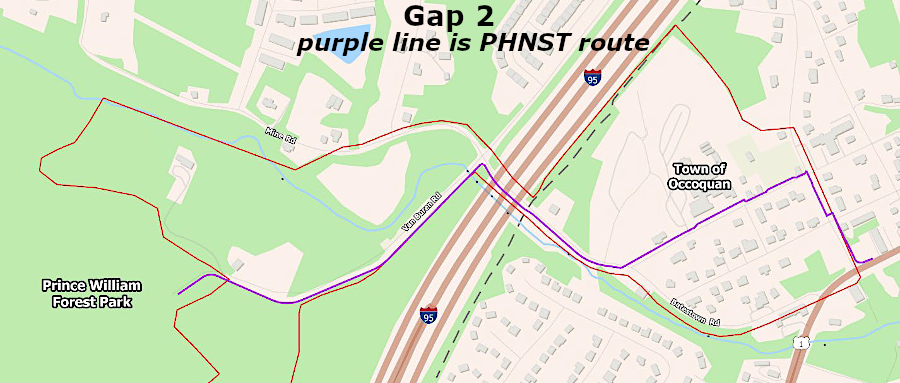
– Dumfries underneath I-95 along Batestown Road to Prince William Forest Park (“Gap 2”)
– inside Prince William Forest Park, from Van Buren Road to Joplin Road
– Joplin Road to Locust Shade Park (“Gap 3”)
– Locust Shade Park south to Stafford County line
Simply building the one segment through Prince William Forest Park will be complicated. To accelerate the process, the county’s Tourism Office agreed to provide funding for the archeological assessment that must be completed within the park. That funding comes from the Tourist Occupancy Tax revenue paid by campers who have stayed overnight in the park’s campground.
One scenario for getting the PHNST segment within the national park completed:
June 2026: Prince William Forest Park formally proposes archeology contract to the now-centralized contracting office in the Department of the Interior
June 2026: PHNST launches public engagement phase for PHNST Comprehensive Plan
October 2026: Department of the Interior contracting office issues contract for archeological study
June 2026: Prince William Board of County Supervisors approves bond issue for ballot which includes funding to complete PHNST before September 2031
November 2026: voters approve bond issue
October 2027: Prince William Forest Park receives final archeology study identifying no impacts from trail construction (assuming erosion has already removed artifacts)
October 2027: National Park Service completes PHNST Comprehensive Plan
November 2027: Prince William Forest Park issues Finding of No Significant Impact (FONSI – see example) for constructing PHNST through the park, requests funding to build PHNST segment in park before September 2031
November 2027: Prince William Board of County Supervisors includes in legislative agenda a request for state funding to build Segments 1, 2, and 3 of PHNST before September 2031, plus complete the Powells Creek Crossing
January 2028: County Executive releases draft FY29 Capital Improvements Program (CIP) with funding, including $$ to match any state/Federal grants, to build segments outside of Prince William Forest Park
April 2027: Virginia state budget includes at least partial funding for completing Gap 2 and Gap 3 of PHNST
2028: US Congress provides funding to build PHNST segment within Prince William Forest Park
2031: all segments of PHNST in Prince William County open before 250th anniversary (Semiquincentennial) of Washington and Rochambeau march to Yorktown in September 2031
Estimated costs to build the different segments will be released in April as part of the Pathways 2035 – Countywide Trails Plan. Cost estimates were developed in 2025 for Gaps 1, 2, and 3 through a Federal Land Access to Parks (FLAP) study:
Gap 1: $4.7 million
Gap 2: $3.5 million
Gap 3: $5.8 million